As autumn settles in across Central Queensland and the afternoons begin to shorten, a familiar pattern emerges in many households. The golden after-school hour that once meant outdoor play naturally contracts, and screens — tablets, televisions, phones — quietly expand to fill the space. It happens gradually, almost imperceptibly, and before long the balance has shifted further than most families intended.
At Moranbah Early Learning, we are not here to vilify screens. Used thoughtfully, technology can be a genuinely valuable part of a young child’s world. But we do care deeply about ensuring that the shortening days of autumn and winter do not inadvertently steal the outdoor time that young children’s bodies, brains, and souls genuinely need — and we believe that with a little intention, families can find a balance that works beautifully for everyone.
Why Nature Time Cannot Be Replaced
There is a growing body of research — and a great deal of common parental wisdom — confirming what many of us feel intuitively: time in nature does something for young children that nothing else quite replicates.
Outdoor play supports gross motor development, physical fitness, vitamin D absorption, immune function, and sensory integration in ways that indoor environments simply cannot match. Beyond the physical, nature has a measurable calming effect on the developing nervous system. Studies consistently show that time spent outdoors reduces cortisol levels, improves attention, deepens sleep, and lifts mood in young children — and in their caregivers.
The concept of nature deficit disorder, first articulated by journalist Richard Louv in Last Child in the Woods, describes the very real costs — behavioural, emotional, and cognitive — that accumulate when children spend insufficient time in natural environments. It is not a clinical diagnosis, but it points to something real: young children who spend most of their time indoors and in front of screens are missing something their development genuinely requires.
In Moranbah, we are fortunate. Even as the days shorten, our Central Queensland climate remains mild and generous well into the cooler months. There is rarely a day that does not offer a window — even a short one — for a child to feel grass under their feet, look up at an open sky, and simply be outside.
Understanding Screen Time in the Early Years
The Australian guidelines on screen time for young children are clear and worth knowing. For children under two years, screen time is not recommended at all, outside of video calls with family. For children aged two to five, no more than one hour per day is the recommended limit — and quality and context matter just as much as quantity.
Not all screen time is equal. A child passively watching fast-paced commercial content is having a very different experience to a child video-calling a grandparent, engaging with a thoughtfully designed educational app alongside a caregiver, or watching a nature documentary with a parent who is asking questions and making connections. Co-viewing and co-engagement — where an adult participates, narrates, and extends the learning — significantly changes what a child takes from a screen experience.
What the research consistently cautions against is passive, unaccompanied, fast-paced screen consumption — particularly in the hour before bed, which disrupts melatonin production and sleep quality, and as a default response to boredom, which short-circuits the beautiful, productive struggle of a child learning to entertain themselves.
Finding the Balance: Practical Strategies for Shorter Days
The goal is not perfection. It is an intention. Here are some approaches that work well for families navigating this seasonal shift:
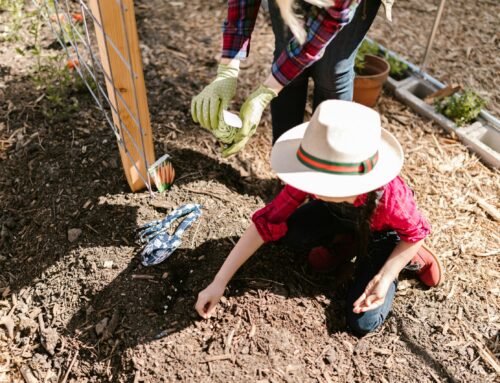
Protect the outdoor window. Even on the shortest autumn days, there is usually a usable hour of afternoon light. Treat it as non-negotiable — a daily outdoor commitment, even if it is simply a walk around the block, time in the backyard, or a trip to the local park. In Moranbah’s mild autumn climate, this is almost always possible and almost always worth it.
Create a simple daily rhythm that positions outdoor time before screen time, rather than the other way around. Once screens are on, it is significantly harder to motivate little ones to go outside. Reverse the sequence and the transition becomes much easier.
Offer nature-based alternatives to screens that are genuinely appealing: a torch and a garden to explore in the early dusk, a simple outdoor cooking fire with supervision, cloud watching, collecting interesting rocks or seed pods, or setting up a bird-feeding station to observe each afternoon. These activities speak to the same curiosity that draws children to screens, but with far richer developmental returns.
Use screens actively, not passively. When screen time does happen, sit alongside your little one. Ask questions. Pause and talk. Connect what you are watching to the real world — “That’s a king parrot! I wonder if we’d see one of those if we went outside tomorrow morning.”
Establish a screen-free wind-down before bed. The hour before sleep is best filled with calm, physical, low-stimulation experiences — a bath, a story, quiet play, connection. This is not about deprivation; it is about giving young nervous systems the conditions they need to transition into genuine rest.
What We Do at Moranbah Early Learning
At our centre, we prioritise outdoor learning and nature-based play as a fundamental part of each day, regardless of the season. Our educators are intentional about maximising outdoor time during the cooler, more comfortable months of the year, and our curriculum is designed to ensure that the natural world remains central to children’s daily experience.
We limit and thoughtfully curate any screen use within our program, ensuring it is purposeful, brief, and always supplementary to the hands-on, relationship-based, nature-connected learning that we know serves young children best.
We also recognise that families are navigating real pressures — work schedules, tired children, shorter days, and the understandable appeal of a peaceful thirty minutes while dinner is prepared. Our role is not to judge any of that, but to partner with you in finding rhythms that honour your child’s developmental needs alongside the beautiful complexity of real family life.
Shorter days do not have to mean less nature. They simply mean being a little more intentional about protecting the time that matters most. Even twenty minutes of outdoor play in the golden afternoon light of a Moranbah autumn is a gift worth giving — to your little one, and honestly, to yourself as well.
📞 Visit us online to get in touch 🌐 moranbahearlylearning.com.au
Sources
- Australian Government Department of Health – Australian 24-Hour Movement Guidelines for the Early Years (Birth to 5 Years) https://www.health.gov.au/resources/publications/australian-24-hour-movement-guidelines-for-the-early-years-birth-to-5-years
- Louv, R. – Last Child in the Woods: Saving Our Children from Nature-Deficit Disorder (Algonquin Books, 2005) https://richardlouv.com/books/last-child
- Royal Australian College of Physicians (RACP) – Screen Time and Young Children: Evidence and Recommendations https://www.racp.edu.au
- Australian Children’s Education & Care Quality Authority (ACECQA) – Belonging, Being & Becoming: The Early Years Learning Framework for Australia (EYLF V2.0) https://www.acecqa.gov.au/sites/default/files/2023-01/EYLF-2022-V2.0.pdf
- Raising Children Network – Screen Time: Children Under 5 https://raisingchildren.net.au/toddlers/play-learning/screen-time-technology/screen-time
- Berto, R. – The Role of Nature in Coping with Psycho-Physiological Stress, Behavioural Sciences (2014) https://www.mdpi.com/journal/behavsci
- Zero to Three – Beyond Screen Time: A Parent’s Guide to Media Use https://www.zerotothree.org
- Moranbah Early Learning – Our Approach to Play and Learning https://moranbahearlylearning.com.au